Artist Dossier: AUKAI (Markus Sieber)
Links: aukaimusic.com · aukai.bandcamp.com · Chambers on Bandcamp · Instagram · Meet the Artist interview (2020) · PEOPLE 2026 participants
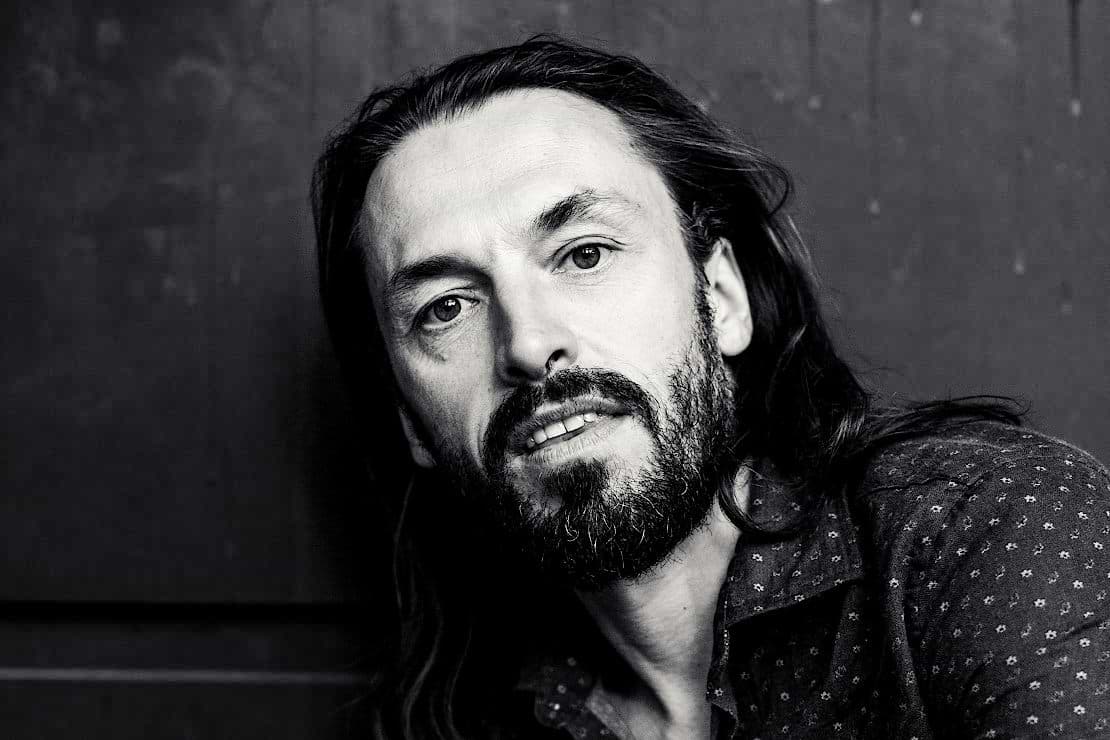
Bio
- Aukai is the ambient acoustic / neoclassical project of composer and multi-instrumentalist Markus Sieber (credits name: Ralph Markus Sieber†) — self-stated on the site masthead and About page; the credits name is from the Chambers credits.
- Aukai is Hawaiian for a seafarer, a traveler (aukaimusic.com/about).
- Current base: Palma, Spain — the newest own surface (Bandcamp profile); supersedes the publisher’s older “Colorado” (Manners McDade; see ledger).
- Press: New York Times, Uncut (8/10), Bandcamp, Headphone Commute (aukaimusic.com, Chambers Bandcamp page).
- Confirmed PEOPLE Festival 2026 participant — festival roster seed, authoritative for this fact; listed on peoplefestival.berlin/participants.
Practice Summary
- Aukai is Markus Sieber’s project of quiet, cinematic instrumental music — “ambient acoustic soundscapes” built from what he calls “instrumental short stories”: brief, haunting pieces centered on the ronroco, an Andean ten-string relative of the charango, woven with guitars, keys, and subtle electronics (aukaimusic.com, aukaimusic.com/about).
- The work is minimalist by conviction — recorded fast, in resonant rooms, with self-imposed limits (Chambers press text, aukaimusic.com).
- Its constant subject is memory and place: East German childhood, Mexican rebirth, Rocky Mountain solitude (aukaimusic.com/about, Meet the Artist interview).
- His newest album Chambers (2026) was recorded in Saal 3 at Funkhaus Berlin — the festival’s own building, which Sieber knew as a teenager through GDR youth radio (Chambers press text, Chambers credits).
Threads they care about
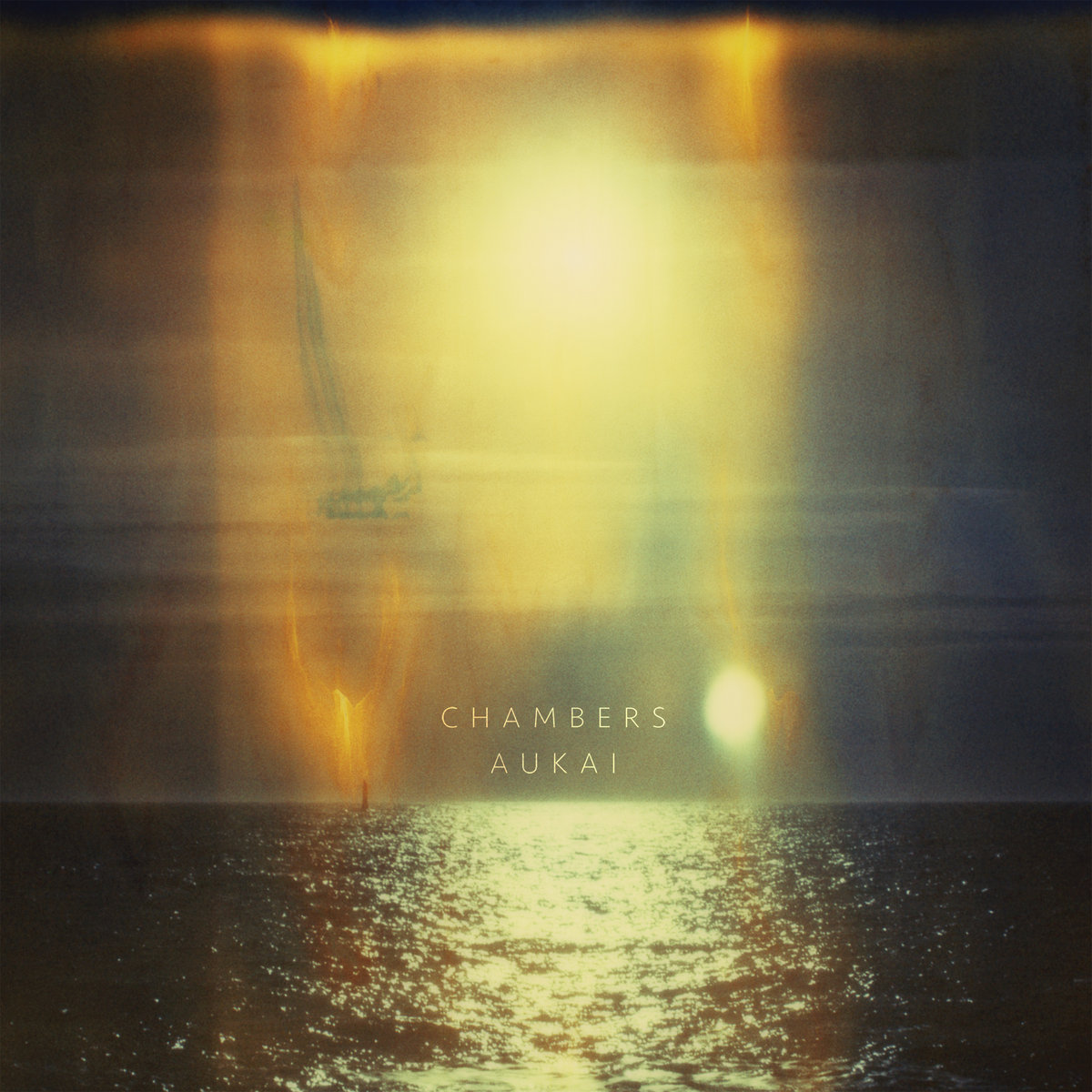
1. The festival’s own building is inside his newest album
Chambers (Mar 2026) was recorded in Saal 3 at Funkhaus Berlin — and the place-history runs deeper. Funkhaus was the GDR’s largest broadcast station, and Sieber listened to its youth radio DT64 as a teenager; walking its preserved hallways today is “like going through a time portal” (Chambers press text + Sieber direct quotes, aukaimusic.com; Chambers credits, Bandcamp).
For the room, the festival’s own venue is inside the newest record, so the building itself is material. Made spatial in Variant C’s background hallway.
2. The ronroco he calls “my baby”
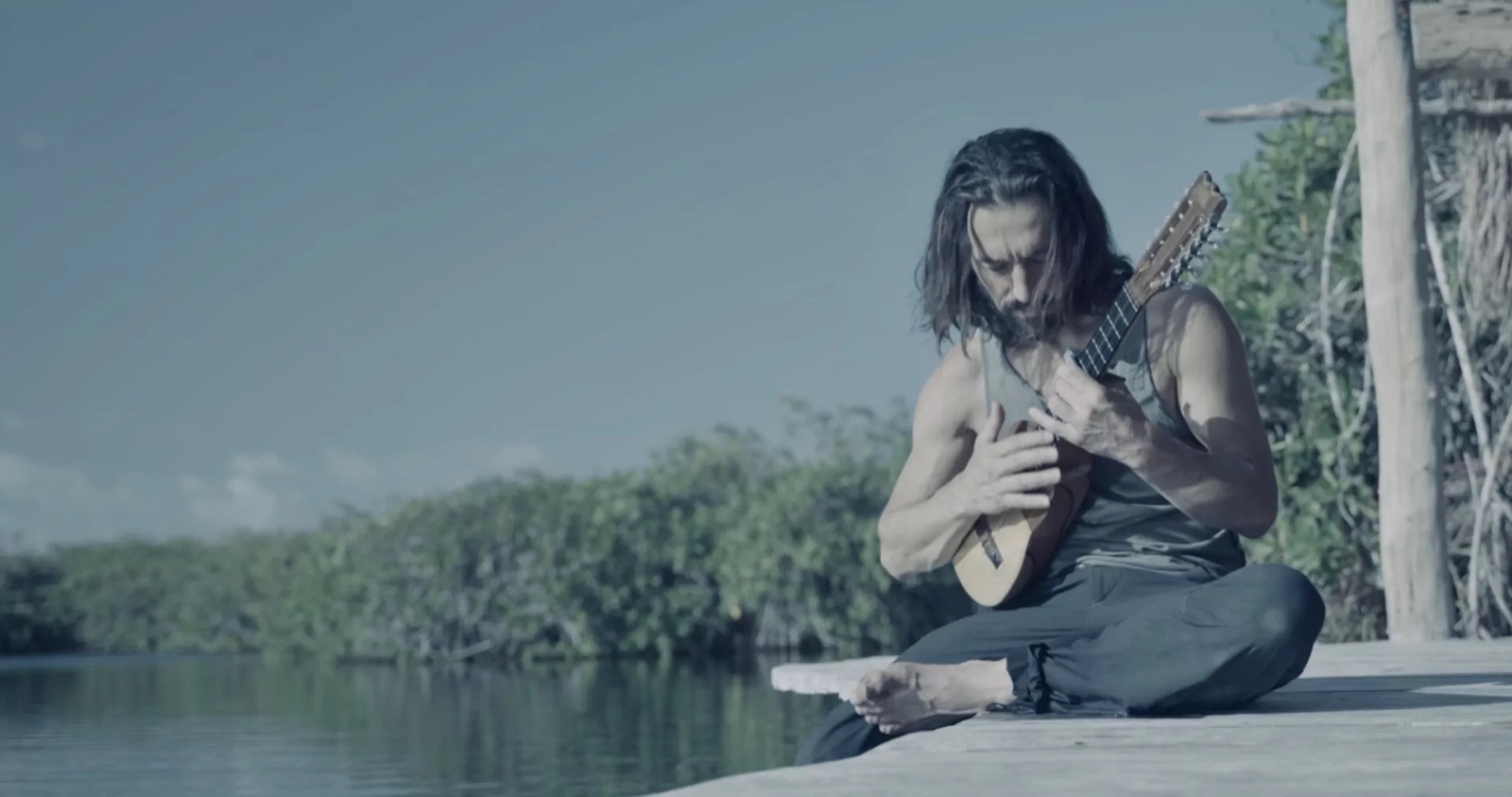
The Andean ten-string at the center of nearly everything — “my most treasured possession… I call it my baby” (aukaimusic.com/about; Meet the Artist interview, direct quotes). Self-stated, canonical.
For the room, this is the anchor: one small instrument at the center of a large silence.
3. Copper bell plates from Vilnius
Discovered at Tone of Life instruments, Lithuania; “when struck with the fingertips they have a subtle, magical ring” (Chambers press text, Sieber quote; Chambers credits).
An instrument almost no visitor will recognize — the room’s surprise element.
No image: the bell plates appear in no photograph on the artist’s own site or Bandcamp; Instagram is walled at plain fetch. Nothing self-presented found.
Medium & Materials
- Ronroco / baritone charango — Andean plucked ten-string instrument, “the key instrument of most of my music”; “my most treasured possession… I call it my baby” (aukaimusic.com/about; Chambers press text + credits; Meet the Artist interview) — self-stated, canonical; corroborated by Manners McDade
- Classical octave guitar — one of his two “signature instruments” (Chambers press text; Chambers + Meld credits) — self-stated
- Baritone guitar (Chambers + Meld credits) — self-stated
- Reed organ, piano, celeste — Saal 3’s house instruments, played on Chambers (Chambers press text; Chambers credits) — self-stated
- Copper bell plates — discovered at Tone of Life instruments, Vilnius; “when struck with the fingertips they have a subtle, magical ring” (Chambers press text; Chambers credits) — self-stated
- Analog synthesizers — Juno 60, Moog Minitaur, Osmose, Prophet 5 (Chambers + Meld credits) — self-stated
- Mobile/travel recording equipment — “converting houses, cottages and chalets into home recording studios across the Americas and Europe” (Chambers press text) — self-stated (single surface)
- Vinyl — albums released on vinyl; cut by Andreas Kauffelt at Schnittstelle (aukaimusic.com order links; Chambers credits) — confirmed
- Ensemble collaborators invited per piece — “it’s not a one-man show” (Meet the Artist interview; Bandcamp bio) — self-stated; Chambers was the first album where he played everything himself (Chambers press text) — self-stated (single surface)
Aesthetic Vocabulary
- Sepia-toned — the press text’s own word for the Aukai sound; “light the color of old photographs” is an inference from it
- Gossamer, filigreed, fragile — “gossamer webs of plucked string timbres” (press text); “delicately filigreed” (About); “minimalist, fragile, and honest” (Headphone Commute, quoted on aukaimusic.com)
- Intimate yet spacious — the project’s stated paradox (Chambers press text); music of small instruments in large silences
- Waiting stillness — “a stillness waiting to respond to the quietest, most tender tones” (Sieber, on Saal 3); silence as an active participant
- Contained / cave-like — “like being in an underground cave, protected from an outside world” (Sieber)
- Time portal / memory — GDR hallways “preserved just as they had been” (press text); his stated core inspiration is “memories and how they appear and relate in the present” (Meet the Artist)
- Mountain air, space, freedom — the charango’s sound “literally transmits the experience of being up high in the mountains” (Sieber, About)
- Perpetual motion picking — “perpetual-motion acoustic guitar picking… other sounds and reverberations waft in without breaking the spell” (New York Times, quoted on aukaimusic.com)
- Melting snow — “like gently melting snow on a sunny hillside” (About); nature-time, slow release
- Warm, moody, haunting, cinematic; a hint of electronica — recurring press and self-description language (aukaimusic.com, Bandcamp bio)
- Constraint as method — “expansion within self-imposed limitations” (Sieber, press text); three days of recording over two years, mixed in a day and a half, no revisions
- Inferred: the palette of his world skews warm wood, copper, honey, and dust — the colors of old broadcast halls and stringed instruments — rather than cool minimalist white
Visual Inventory
Objects & Surfaces
- Ronroco / baritone charango (small ten-string Andean lute, wooden) [self-stated]
- Classical octave guitar [self-stated]
- Baritone guitar [self-stated]
- Reed organ [self-stated]
- Piano [self-stated]
- Celeste [self-stated]
- Analog synthesizer (compact, vintage — Juno 60 / Moog Minitaur class) [self-stated]
- Hanging copper bell plates [self-stated]
- Compact travel recording rig — portable recorder, cables, microphones on stands [self-stated, single surface]
- Vinyl records / record sleeves [confirmed]
- Wooden chair (performance/recording seating — entailed by solo string practice; kept generic) [†def — furnish, never carry]
Materials & Textures
- Warm wood — instrument bodies, studio interiors [self-stated]
- Copper — bell plates’ “resonant copper tones” [self-stated]
- Preserved 1950s GDR broadcast-building surfaces — long hallways kept as they were [self-stated, direct quote]
- Sepia / aged warm tones [self-stated — press text’s own descriptor]
Spatial Signatures
- A tall recording hall built for chamber ensembles — spacious, hushed, acoustically alive (Saal 3) [self-stated]
- One small instrument at the center of a large silence — the practice’s core image [self-stated: two signature instruments carried into an empty hall]
- Long preserved corridors leading to the room — “walking through the hallways… like going through a time portal” [self-stated, direct quote]
- Instruments arranged for one player working alone — everything within reach of a single chair [self-stated: Chambers played entirely by Sieber]
- Rooms temporarily converted into studios — equipment that visibly travels [self-stated, single surface]
Studio Design Brief
Visual anchor
The ronroco — a small ten-string lute alone on a chair at the center of a tall, resonant hall. The scale contrast (small instrument, vast room) is the music.
Mood
Hushed, warm, sepia-lit; a waiting stillness. The room feels like it is listening.
Density
Sparse-to-moderate. The practice is explicitly minimalist and constraint-driven — “expansion within self-imposed limitations” — so emptiness is fidelity, not absence.
Surprise element
The hanging copper bell plates — an instrument almost no visitor will recognize, discovered at a Vilnius instrument workshop, rung with fingertips. Reward for walking to the far end of the room.
Negative space
Overhead. The hall’s height should stay open — silence lives in the upper half of the composition, where UI labels can also live.
Sketch Brief
The content half of a draft-status sketch prompt; the style half lives with the art director and is joined at assembly. Inventory-bound and thread-tied; no texture, palette, or lighting guesses. All of it is a recommendation — the artist and the art director change anything.
In the sketch — ranked, up to four, each naming its thread
- A small ten-string Andean lute — the ronroco — resting alone on a wooden chair at the center of a tall, empty recording hall — thread 2 (the ronroco he calls “my baby”), in the hall of thread 1 (Saal 3).
- Copper bell plates hanging from a frame at the far end of the hall — thread 3 (the Vilnius bell plates; the surprise element).
- A doorway opening onto a long preserved 1950s broadcast-building corridor — thread 1 (Funkhaus, “like going through a time portal”).
- A reed organ standing closed against the far wall — thread 1 (Saal 3’s house instruments, sourced in the Chambers credits).
Left open for the artist — what the sketch deliberately leaves blank
- The walls · what stands between the chair and the far end · whether the corridor is lit or dark · which of the other instruments (guitars, synths, piano, celeste) are present · the season and the hour.
Self-stated visual importances — only what they have said matters, with the link
- Two stated spatial experiences, not a stated visual preference: Funkhaus’s hallways “preserved just as they had been… like going through a time portal,” and Saal 3 as “like being in an underground cave, protected from an outside world” — both Sieber’s own words in the Chambers press text. The corridor in item 3 and the hall’s containment come from these.
For the art director — their own visual vocabulary, as hints
- “Sepia-toned” · “gossamer webs of plucked string timbres” (press text) · “a stillness waiting to respond to the quietest, most tender tones” (Sieber, on Saal 3) · “like gently melting snow on a sunny hillside” (About).
Content prompt — about 45 words, 2–4 objects, no people, no camera
A small ten-string Andean lute rests alone on a wooden chair at the center of a tall, empty recording hall. At the far end, copper bell plates hang from a frame beside a doorway opening onto a long preserved corridor.
Room Descriptions
Signature — In the middle of a tall, hushed hall: one small ten-string instrument from the Andes, resting on a chair. Pluck a string and the room answers back. The air is warm and still — the kind of silence that seems to wait for the quietest note you can make.
Working — Guitars lean in a half-circle: octave, baritone, a charango. Cables run to a small travel rig that has turned houses and mountain chalets on two continents into studios. The floor creaks as you cross it, and you soften your steps without deciding to.
Unexpected — At the far end, copper plates hang from a frame. Struck with the fingertips they give a subtle, almost imaginary ring — he found them near a Lithuanian forest. The cold metal hums against your skin long after the sound is gone.
Atmospheric — Mostly empty, very tall. Late-summer light the color of old photographs. Somewhere low, a reed organ holds a note you feel in your chest more than hear. It is contained in here — like a cave, protected from the outside world.
The Encounter — He has just stepped out. The ronroco — the one he calls his baby — rests where he set it down, recorder still running. A record sleeve, a chair pushed back, the warmth of a long afternoon take still in the air. He won’t be long.
Invention audit (v3 retrofit — scene-dressing beyond sourced facts, per the As-Interesting-As-Possible rule; each also logged in the Claims ledger): - Room 2: the creaking floor [invented, tagged] — no source describes Saal 3’s floor. - Room 3: “near a Lithuanian forest” [invented, tagged] — sourced fact is Tone of Life instruments, Vilnius; the forest setting is dressing. Also the metal humming against your skin [invented, tagged] — sensory extrapolation from the sourced “subtle, magical ring.” - Room 4: “late-summer light” [invented, tagged] — sepia tone is sourced, the season is not; the reed organ holding a note in the empty room [invented, tagged] — the instrument is sourced, the moment is staged. - Room 5: the recorder still running and the “warmth of a long afternoon take” [invented, tagged] — Encounter staging around sourced objects. - Rooms 1 and the remaining lines are bound to inventory + sourced facts (resonant hall, waiting stillness, cave-like containment are all self-stated language).
Image Prompt Variants
Variant A — Sparse
Strategy — Maximum breathing room. One strong focal point. The rest of the space gives it room to exist. Contemplative, quiet.
Objects — 2 (ronroco, wooden chair)
Prompt — Square composition. A small ten-string Andean lute — a ronroco, warm wood, round-backed — rests upright on a plain wooden chair at the center of a tall recording hall built for chamber music. The hall around it is empty: bare floor stretching away on every side, walls receding into soft shadow, ceiling far above. Soft diffuse daylight falls from high on the right, warm and late-summer in temperature, pooling around the chair and fading to dusk at the edges. The upper two-thirds of the frame is open air and silence.
Palette — sepia, honey-brown, bone, deep umber
Lighting — high right, soft and diffuse, warm late-afternoon temperature
Negative space — upper two-thirds fully open; floor recedes to shadow on all sides
Variant B — Curated
Strategy — Moderate density. Feels intentional — as if the artist arranged exactly what they want you to see. The “open studio” feel. Default recommendation.
Objects — 6 (ronroco on chair, octave guitar, baritone guitar, travel recording rig, reed organ, vinyl records)
Prompt — Square composition. In a tall, warm-toned recording hall, a ronroco sits on a wooden chair, with an octave guitar and a baritone guitar leaning on stands beside it in a loose half-circle — everything within reach of one player. A compact travel recording rig sits on the floor at the circle’s edge, cables running neatly toward the instruments. Against the far wall, an old reed organ stands closed, a few vinyl records resting on its top. Warm directional light enters from tall and left, soft-edged; the wall behind the organ stays bare, and the ceiling dissolves upward into shadow.
Palette — sepia, walnut, brass, cream
Lighting — tall left, soft directional, warm temperature
Negative space — entire upper third open; far wall bare except the organ
Variant C — Layered
Strategy — Higher density in clear zones. Rewards slow looking. For the visitor who stays.
Objects — 9, in three zones (ronroco + chair + travel rig / piano + celeste + synthesizer / reed organ + bell plates + hallway doorway)
Prompt — Square composition. Foreground: a ronroco on a wooden chair, a compact travel recording rig open on the floor beside it, cables coiled. Middle zone, to the left: a piano and a small celeste stand side by side, a vintage analog synthesizer resting on the piano’s closed lid. Background, far right: copper bell plates hang from a frame near an old reed organ, their metal catching the only cool glints in the room; behind them a doorway opens onto a long preserved 1950s hallway that recedes into darkness. Diffuse warm light falls from high above the foreground and dies gradually toward the hallway, so the room grows older and quieter with depth. The center of the floor and the full height above the piano remain open.
Palette — sepia, dark walnut, copper, muted green
Lighting — high overhead in foreground, diffuse and warm, falling off to darkness in the background
Negative space — open center floor and upper third above the middle zone — roughly 30% of frame
Square composition (1:1). 2000–4000 px. All objects drawn from Visual Inventory only.
Identity resolution
Case B — project alias. “AUKAI” is a project, not a person’s name — Aukai is Hawaiian for a seafarer, a traveler (aukaimusic.com/about). The person behind it is Markus Sieber, resolved from 2+ of his own surfaces plus his publisher: (1) aukaimusic.com’s own masthead and About page (“the project by multi-instrumentalist and composer Markus Sieber”); (2) Bandcamp artist bio and album credits (“written by Markus Sieber” / “All music written, played and produced by Aukai ( Ralph Markus Sieber )”); (3) his publisher Manners McDade’s composer page (“Markus Sieber is a German artist who records under the pseudonym Aukai”). Per the Case-B convention: the room belongs to Aukai — the project’s world; Sieber appears only as traces (an instrument set down, a session still warm), never depicted. Dossier text names the project “Aukai” and the person “Sieber.”
Source Ledger
Claims
| Claim | Source(s) | Confidence |
|---|---|---|
| Aukai = project of Markus Sieber; “Aukai” is Hawaiian for seafarer/traveler | aukaimusic.com (masthead) + /about; aukai.bandcamp.com (bio) + Chambers credits; mannersmcdade.co.uk composer page | Self-stated (canonical for identity); corroborated by publisher |
| Credits name “Ralph Markus Sieber” | Chambers credits (Bandcamp) | Self-stated (single surface) |
| Ronroco/charango = key instrument; “my baby”; Andean ten-string | aukaimusic.com/about; Chambers press + credits; Meet the Artist (2020, direct quotes); Manners McDade | Self-stated (canonical; direct quotes) |
| Ronroco origin: About page says “from the Andes”; Manners McDade + interview footer say “from Argentina” | aukaimusic.com/about vs. Manners McDade + Meet the Artist footer | Contested — body says “Andean” (the artist’s own newest surface) |
| Instrument roster: octave guitar, baritone guitar, piano, celeste, reed organ, bell plates, Juno 60, Moog Minitaur, Osmose, Prophet 5 | Chambers credits; Meld credits (Bandcamp profile); Chambers press text | Self-stated (own credits) |
| Chambers (Mar 2026) recorded at Saal 3, Funkhaus Berlin (Nils Frahm-upgraded chamber hall); 3 non-consecutive days over ~2 years; mixed in 1.5 days, no revisions; first album played entirely by Sieber; engineer Antonio Pulli | Chambers press text on aukaimusic.com AND Bandcamp — same syndicated text, counted as ONE source — + Sieber direct quotes; Chambers credits | Self-stated (press text + direct quotes); Saal-3 recording corroborated by credits |
| Funkhaus childhood link: GDR’s largest broadcast station; teenage listener of DT64; “time portal” hallways | Chambers press text + Sieber direct quote | Self-stated (direct quote; canonical) |
| Bell plates found at Tone of Life, Vilnius; copper; fingertip-struck | Chambers press text (Sieber quote) + Chambers credits | Self-stated (quote + credits) |
| Biography: born near Leipzig; childhood in an old forge village near Dresden; Potsdam at 16; 90s rock bands; actor in Berlin & St. Petersburg; move to Mexico (Tepoztlán); Mirabai Ceiba duo with wife Angelika; years in Colorado Rockies | aukaimusic.com/about; Meet the Artist interview; Manners McDade | Self-stated (own about + interview); corroborated by publisher |
| Current base: Palma, Spain (vs. Manners McDade’s “currently Colorado”) | aukai.bandcamp.com profile; mannersmcdade.co.uk | Contested/Superseded — resolved to Palma, the artist’s own newest surface |
| Discography incl. Chambers (Mar 2026), Meld w/ Vraell (Jul 2026), Maulincho (2025), Temporal (2024), Apricity (2022), Game Trails (2020), Branches of Sun (2018) | Bandcamp discography; Manners McDade | Confirmed |
| Film/TV: scored The Tale (2018); co-scored Netflix Caught in the Web: Zona Divas w/ Clarice Jensen (2024) | Manners McDade | Single-source† (third-party-verifiable career claim — stays in Confirmed/† discipline) |
| Press quotes (NYT, Uncut, Bandcamp, Headphone Commute) | aukaimusic.com; Chambers Bandcamp page | Confirmed |
| Travel-rig recording in houses/cottages/chalets across Americas + Europe | Chambers press text | Self-stated (single surface) |
| PEOPLE 2026 confirmed participant | Festival roster seed (raw/people-festival-participants-2026.json) · peoplefestival.berlin/participants | Confirmed (seed authoritative for the fact it directly asserts) |
| Engineer name spelled both “Antonio Pulli” and “Antonia Pulli” within the same press text | Chambers press text | Contested — resolved toward the credits’ “Antonio” |
| Room-description scene-dressing: creaking floor; forest setting for the Vilnius workshop; metal humming on skin; late-summer light; organ note held in the empty room; recorder still running / afternoon warmth | none — see Invention audit under Room Descriptions | Invented, tagged (rooms 2–5) |
Retrieval
| URL | Status |
|---|---|
| aukaimusic.com | ok — rich (full Chambers press text) |
| aukaimusic.com/about | ok — rich (bio, identity, ronroco quotes; site’s own encoding drops glyphs: “ligreed”, “shing”, “nd” — worked around) |
| aukai.bandcamp.com | ok — rich (Meld credits, artist bio, discography, location) |
| aukai.bandcamp.com/album/chambers | ok — rich (full credits, personnel, label Apapachoa Records) |
| meettheartist.online/2020/08/24/aukai | ok — rich (long-form direct quotes) |
| mannersmcdade.co.uk/composer/markus-sieber | ok — rich (publisher bio, film credits, Mirabai Ceiba) |
| The Tonearm interview (via a Bandcamp fan comment) | not fetched — discovered, unused |
| Echoes.org podcast pages | not fetched — discovered, unused |
| Digital in Berlin profile | not fetched — discovered, unused |
| EARMILK premiere | not fetched — discovered, unused |
All fetches via tools/fetch.py --no-substrate-check;
zero failures; no walls hit.
Images
| File | Origin page | Shows | Thread |
|---|---|---|---|
img/aukai/00-portrait.jpg |
aukaimusic.com/about | Black-and-white press portrait of Markus Sieber, as the project’s own About page presents him (reference only — Case B, the room never depicts him) | header |
img/aukai/01-chambers-cover.jpg |
aukai.bandcamp.com/album/chambers | Chambers cover art: sun-flared light over water with a faint sailboat | 1 |
img/aukai/02-ronroco-banner.jpg |
aukaimusic.com (homepage banner, 2022) | The ronroco being played, seated on a wooden dock by still water | 2 |
| — | — | No self-presented image of the copper bell plates: none on aukaimusic.com or the Bandcamp album page; Instagram not opened (walled at plain fetch, not escalated for a format pass). | 3 |
Process self-report
Sources fetched (all via
tools/fetch.py --no-substrate-check; zero
failures): 1. https://www.aukaimusic.com/ — rich (full Chambers
press text) 2. https://www.aukaimusic.com/about/ — rich (bio, identity,
ronroco quotes; text has OCR-like glyph drops: “ligreed”, “shing”, “nd”
— source site’s own encoding issue, worked around) 3.
https://aukai.bandcamp.com/ — rich (Meld credits, artist bio,
discography, location) 4. https://aukai.bandcamp.com/album/chambers —
rich (credits: full instrument list, personnel, label Apapachoa Records)
5. https://meettheartist.online/2020/08/24/aukai/ — rich (long-form
direct quotes) 6.
https://www.mannersmcdade.co.uk/composer/markus-sieber/ — rich
(publisher bio, film credits, Mirabai Ceiba) Plus one WebSearch pass for
discovery. Wall-clock: roughly 10–12 minutes end to end.
Friction / ambiguity in SKILL.md itself: 1.
Save path conflict. SKILL.md Phase 4 hardcodes
planning/dossiers/{artist-slug}.md; the pilot directed
outputs/people-dossiers/. Followed the pilot instruction.
The skill should take an output-dir parameter or state that the caller
may override. 2. “Independent sources” is undefined for
syndicated press text. The Chambers narrative appears verbatim
on aukaimusic.com and Bandcamp — two URLs, one press release (byline
Alan DiPerna). Counting URLs would launder single-source claims into
“confirmed.” I treated it as one source, promoted its direct Sieber
quotes via the quote rule, and used the structurally distinct credits
block as the second source where possible. The skill should say how to
count syndication. 3. No project-alias / identity-resolution
guidance. The pilot’s central test — how to name person
vs. project, where the person may appear — has no coverage in SKILL.md.
I improvised a convention (header names both; an explicit “Identity
resolution” block; room = project’s world; person = traces only). Worth
codifying, since band/alias cases will recur across 173 artists. 4.
Closed-set scope is stated only for image prompts. Room
descriptions’ fidelity standard is implied but unstated — may an
Encounter description invent scene furniture (steaming tea, a coat)? I
restricted traces to sourced objects, but the skill should say whether
room descriptions are inventory-bound, claim-bound, or free. 5.
Tool mismatch. Phase 1 mandates WebFetch; the host
project mandates tools/fetch.py. Harmless here, but the
skill should name the capability (“fetch each URL”), not the tool. 6.
Confidence taxonomy has no slot for contradiction or
stale-vs-current. Two real cases hit it: ronroco
“Andes” vs “Argentina,” and Colorado (publisher, older) vs Palma
(Bandcamp, current). I added ad-hoc ledger rows; a
“Contested/Superseded” marker would be cleaner. 7. Seed data
unaddressed. The festival provides structured seed
(name/href/bands); the skill doesn’t say whether seed claims count as a
source or need re-verification. I treated the roster as authoritative
only for “confirmed participant.” 8. 280-char limit is checkable
but unchecked. The skill could require reporting counts (mine:
250 / 250 / 227 / 225 / 228). 9. A gift the skill couldn’t have
planned for: the mid-tier “representative” case turned out to
have the festival’s venue at the center of his newest album — Saal 3,
Funkhaus, plus a GDR-childhood radio link. The Layered variant’s
background hallway is that discovery made spatial. A future skill
revision might add one research prompt: “does the artist have history
with the festival’s place?” — for PEOPLE specifically it will keep
paying off.
Retrofit note (2026-08-18, v3 conformance — no re-research): Added Identity resolution (Case B) and the threads-they-care-about section (headed “Money Threads” in v3); re-tagged own-surface claims Self-stated per the v3 taxonomy (third-party-verifiable career claims kept in Confirmed/† discipline); converted the three ad-hoc discrepancy rows to Contested/Superseded, with Palma resolved as the artist’s newest own surface; split the ledger into Claims + Retrieval; reported room char counts (250/250/227/225/228, all <280) and ran an honest invention audit — six pieces of scene-dressing in rooms 2–5 now carry [invented, tagged] in the audit + ledger. One factual fix the audit forced: the Studio Design Brief’s “Lithuanian forest workshop” presented invention as fact (sourced: Tone of Life, Vilnius) — corrected there, kept as tagged color in Room 3. Friction items 3, 6, and 8 above are resolved by v3 itself; left in place as history.
Retrofit to v4.1, 2026-09-15: format pass only — links, bullets, images (3 pulled), Sketch Brief; research unchanged.
Reshaped to v4.2, 2026-09-15: reading order and paragraphing only.